Funding Opportunities \ Publication Grant
Applications for the Publication Grant are now open. Applications must be received by 30 September 2022.
read more
Applications for the Publication Grant are now open. Applications must be received by 30 September 2022.
read more
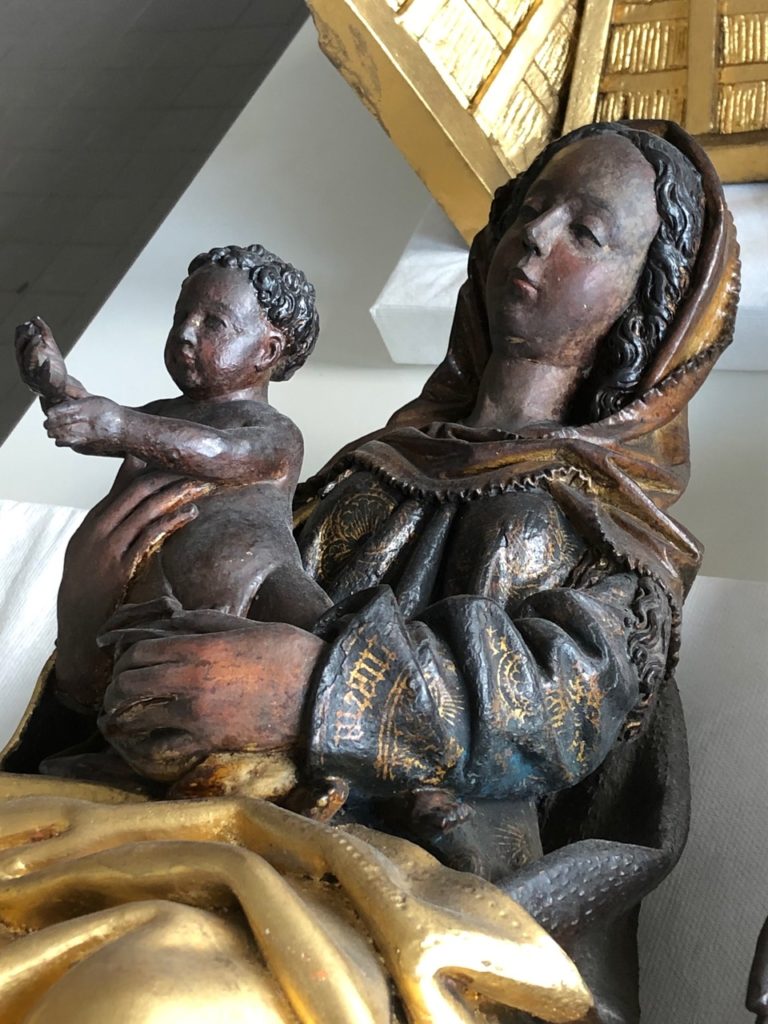
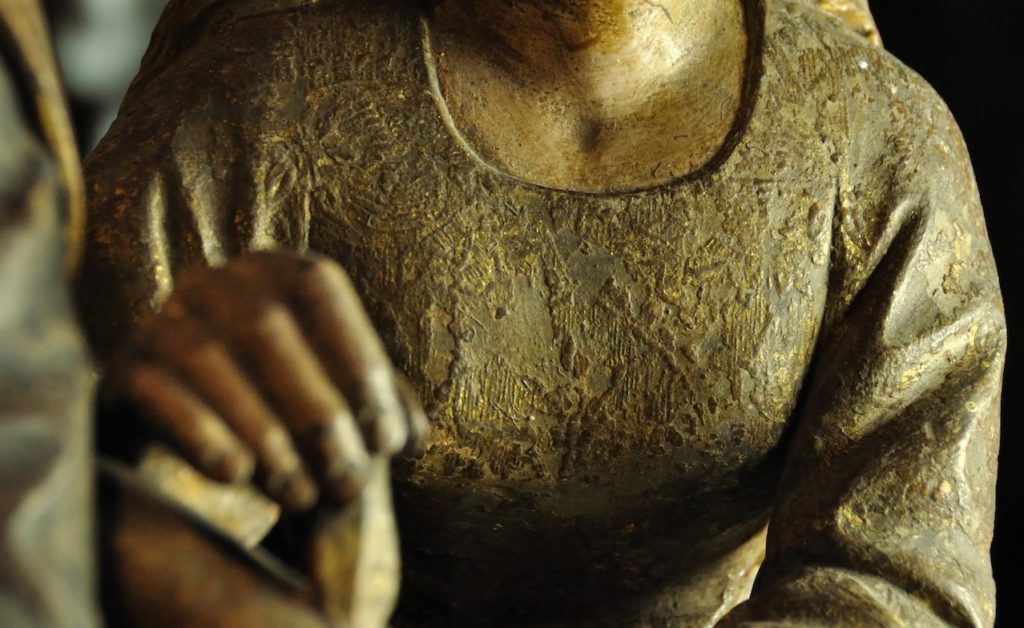
The Adoration of the Magi altarpiece from the San Nazaro Maggiore Basilica in Milan has arrived at the Royal Institute for Cultural Heritage on 15 March 2022 for study and restoration. Coordinated by the Périer-D’Ieteren Foundation since 2017, this project finally got off the ground thanks to the support of the King Baudouin Foundation (René & Karin Jonckheere Fund and Jean-Jacques Comhaire Fund) and the Soprintendenza of Milan.
The altarpiece is currently undergoing a series of tests prior to restoration. The conservation treatment is set to start after the first meeting of the Italian-Belgian scientific committee in late April. While the altarpiece is being restored at the Royal Institute, an in-depth art historical study of this Brussels work, attributed to the Borman dynasty of sculptors, will be carried out. A detailed monograph on the art historical context, execution techniques and restoration will be published at the close of the project.
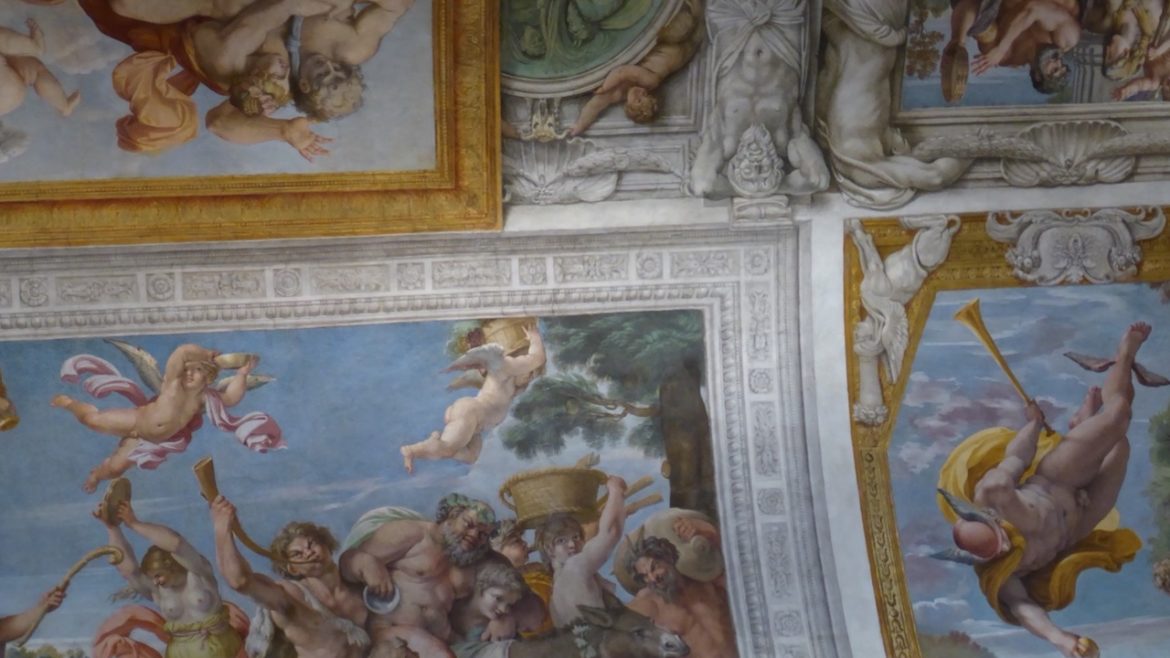
The lectures of the Périer-D’Ieteren Foundation, organised as part of the painting and heritage conservation seminar (HAAR-B5270) of the ULB’s art history and archaeology master’s degree, will be held from 20 to 22 April 2022 on the Foundation’s premises (Rue de Livourne 41, 1050 Brussels). The opening lecture of 19 April 2022 will take place in the Dupréel hall of the ULB (Solbosch campus, building S, floor 1, access Avenue Jeanne 44, 1050 Brussels).
To register for the opening lecture, please send an email to sacha.zdanov@perier-dieteren.org no later than 11 April 2022.
More information on the seminar: link.


The Périer-D’Ieteren Foundation felt it was of the greatest importance to come to the people of Ukraine’s aid amidst the unspeakable suffering inflicted on them by the war. After careful consideration, the Foundation has decided on a targeted support and granted a substantial donation of € 100.000,- to SOS Children’s Villages. In 2024, the Foundation repeated its support and gave SOS Children’s Villages a new donation of € 50.000, -.
Immediately after the start of the invasion, SOS Children’s Villages launched an emergency aid plan for several thousand children and families who are already receiving assistance from a SOS programme in Ukraine: children living in foster families, with distant relatives, in boarding schools or institutions. The aim is to prevent family separation, ensure that children who end up alone receive proper care and protection, and try to reunite families. The emergency aid plan is also about providing immediate assistance, distributing food and basic goods, offering psychosocial support and relocating children who are exposed to danger. The goal of SOS Children’s Villages emergency aid is also to help exiled children and families from Ukraine through the support of SOS organisations in neighbouring countries, such as Poland and Romania. Finally, in the longer run, families will need help to recover and start rebuilding their lives.
We have supported SOS Children’s Villages’ work for a long time and know that the financial aid will be distributed and monitored efficiently and judiciously.


Lecture by Catheline Périer-D’Ieteren as part of the courses of the Collège Belgique, in partnership with the Academia Belgica and under the aegis of the Royal Academy of Sciences, Letters and Fine Arts of Belgium.
17 March 2022, 6 p.m., Academia Belgica (Rome) or via Zoom.
More details on the website of the Academia Belgica (FR/NL/IT).
Due to coronavirus restrictions, registration is required to attend this event in person. Please contact info@academiabelgica.it.
Alternatively, connect to the Zoom livestream using the link below:
https://us06web.zoom.us/j/84782993627?pwd=SW5HRGN5cHRzRk11bzRxOThsdzhlZz09
Meeting ID: 847 8299 3627 / Passcode: 297839
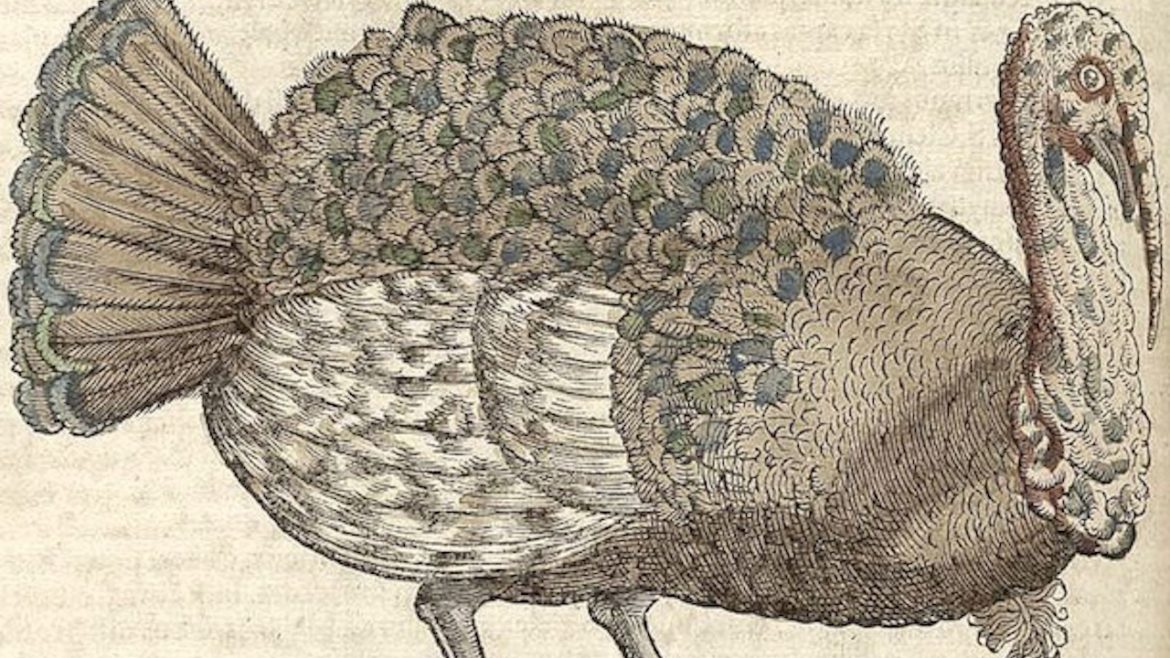
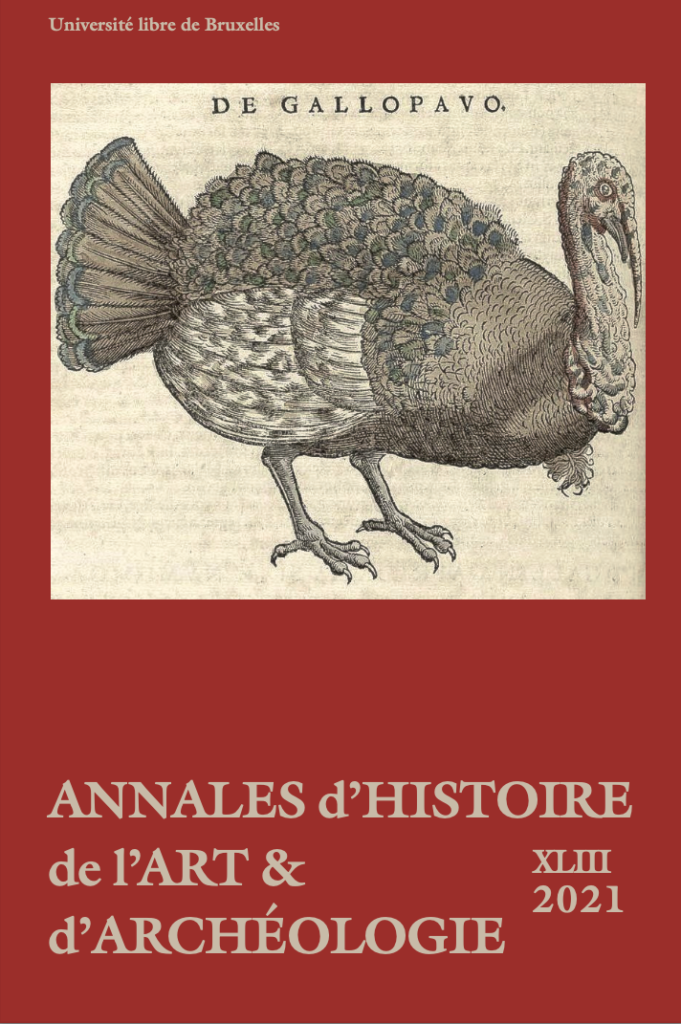
The 43rd issue of the Annales d’histoire de l’art et d’archéologie of the Université libre de Bruxelles (ULB) has been published.
For further information, please reach out to Christine Boulanger (christine.boulanger@perier-dieteren.org).
***
TABLE OF CONTENTS
Sébastien Peel, Le cycle marial de la chapelle d’Eton : analyse des transferts artistiques entre les anciens Pays-Bas et l’Angleterre.
Sacha Zdanov, Le portrait d’Édouard IV d’Angleterre, reflet d’une œuvre perdue du Maître des Portraits Baroncelli.
Didier Martens & Alexandre Dimov, Le Maître de Briviesca, une figure oubliée de l’histoire de la peinture brugeoise du XVIe siècle.
Anne-Sophie V. Radermecker, À propos d’une coupe all’antica de Pietro Maria Serbaldi : un prototype du faux archéologique à la fin du Quattrocento ?
Marie-Anne Dragon, De la plume au pinceau. L’introduction du dindon dans l’iconographie des anciens Pays-Bas au XVIe siècle.
Pierre Anagnostopoulos & Arnaud Schenkel, Lecture d’un relief à l’aide de l’imagerie 3D. Méthode de relevé, analyse et présentation du décor à grotesques d’une colonne du jubé de la collégiale Sainte-Waudru à Mons.
Anne-Sophie Laruelle, Les collections des princes-évêques de Liège (XVIe-XVIIIe siècles) : état de l’art et perspectives.
Erika Basso & Philippe D’Arschot, Une cicogne au bébé. Une rare coupe animalière du XVIIe siècle.
Wendy Frère, Le captif enchaîné : héritage et circulation d’un motif iconographique dans la production des sculpteurs Quellinus.
Georges Rapsaet, Le frontispice gravé par Bernard Picart pour l’édition des Scriptores rei rusticae de Johan Matthias Gesner en 1735. La première représentation de la moissonneuse gallo-romaine et la symbolique de l’Humanisme radical.
Delphine Steyaert, Retables néogothiques conçus par Bethune, l’exemple de l’église Saint-Jacques de Tournai.
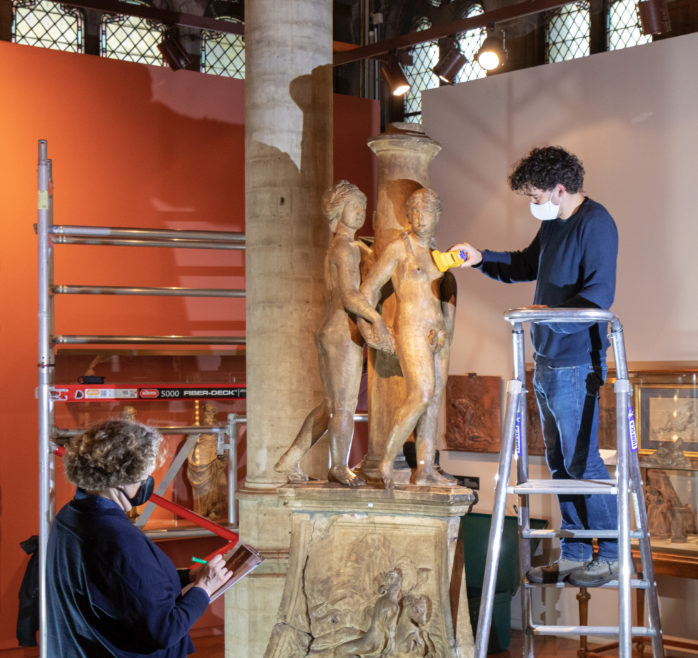
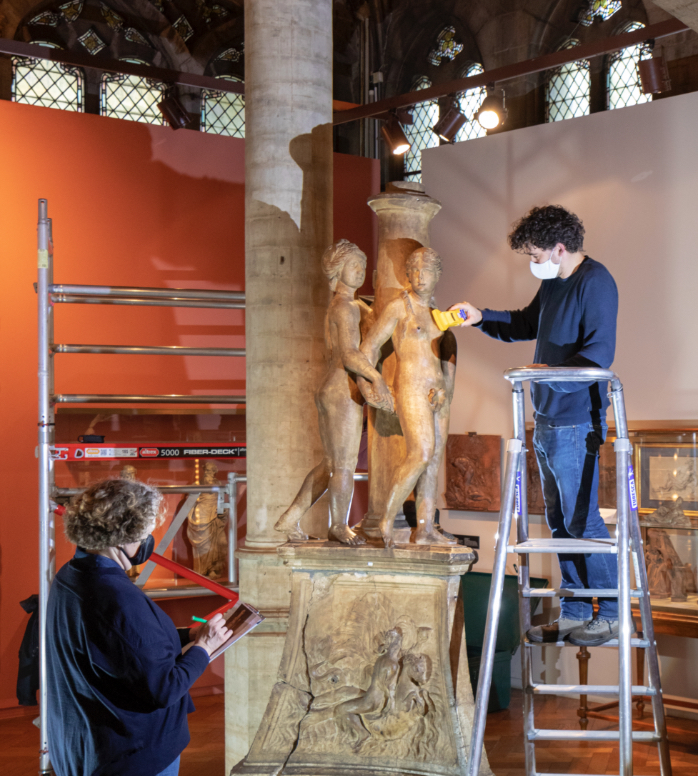
As part of the preliminary study to the restoration of the 16th-century Fountain of the Three Graces from the collections of the Brussels City Museum, the findings of KIK-IRPA’s interdisciplinary team made it possible to attribute the artwork to one of the major sculptors of the Italian Renaissance: Guglielmo Della Porta (1515-1577).
The white marble used by the artist, the iconographic theme of the fountain and the mythological scenes on its pedestal all seem to point to the Italian sculptor. Comparisons with the fountain at Boussu Castle, a well-known work from the sculptor’s workshop, bring the Three Graces even closer to Della Porta. The upcoming restoration of the fountain should enable the restorers to support this attribution.
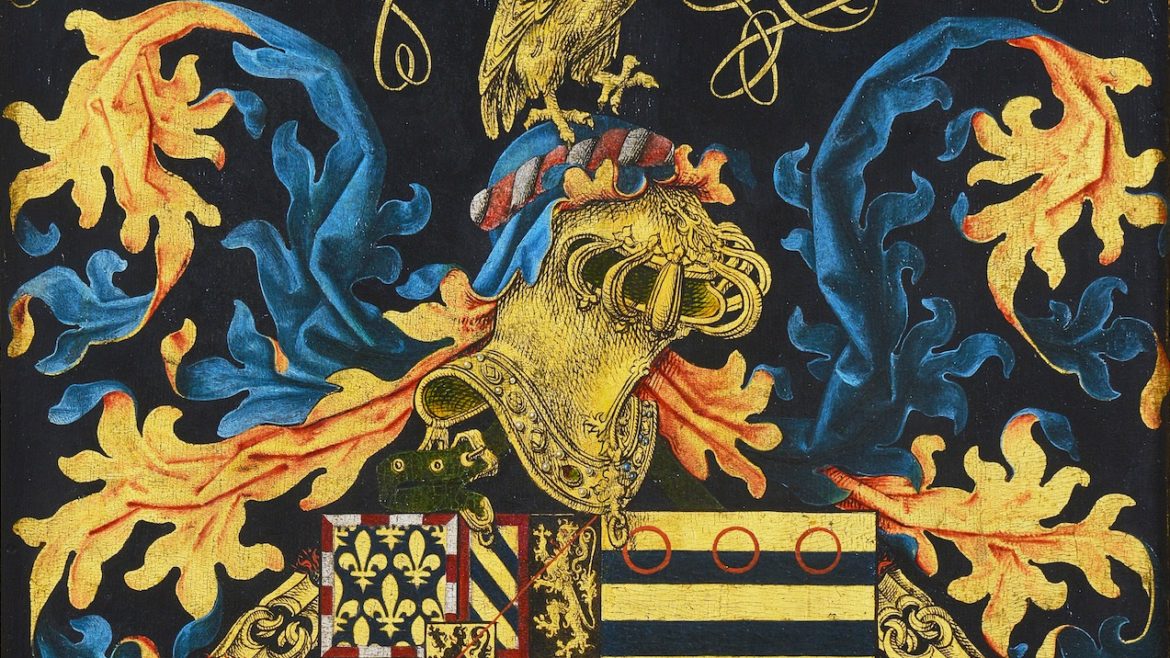
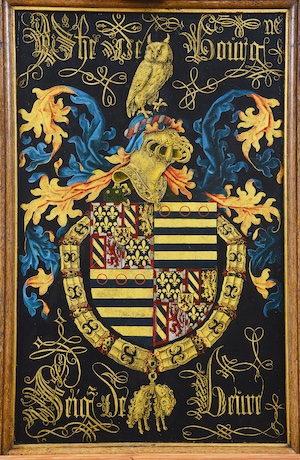
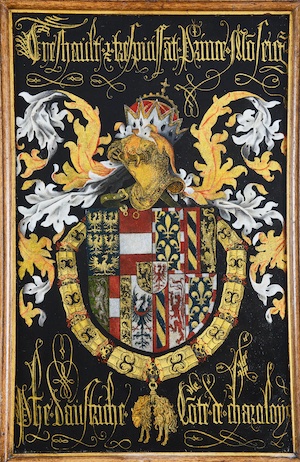
Supported by the Périer-D’Ieteren Foundation, the restoration of the panels bearing the coats of arms of Philip the Fair and Philip of Burgundy has just been completed. The two heraldic paintings will be shown at the Museum Hof van Busleyden in Mechelen as part of the Renaissance Children exhibition, which will open on 26 March (link).
On 22 May 1491, Philip the Fair (1478-1506), then 12 years old, convened the knights of the Golden Fleece in Mechelen. At this 15th chapter of the Order, thirty paintings representing the knights’ coats of arms and names were produced. These artworks have been attributed to court artists, such as Pierre Coustain and Jacob van Laethem. As usual, these panels were hung in the choir of the Saint Rumbold cathedral, where they can still be seen today.
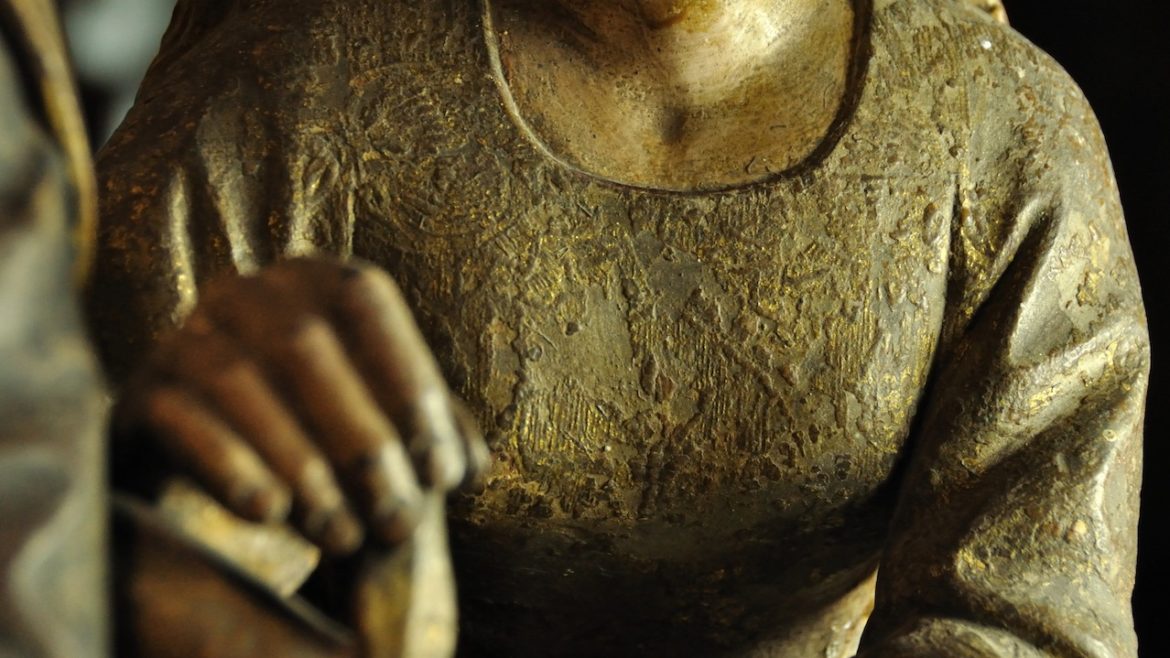
The proceedings of the colloquium on applied brocade organised by the Université Grenoble-Alpes (UGA-CRHIPA) and ARC-Nucléart on 10 and 11 December 2015 have been published, in open access, thanks to the support of the Périer-D’Ieteren Foundation. Edited under the direction of Laurence Rivière Ciavaldini, the colloquium proceedings are available for consultation via the webjournal CeROArt. LINK: https://doi.org/10.4000/ceroart.6943.
Submission deadline : 31 March 2021
The Périer-D’Ieteren Foundation grants its support to a European visiting researcher at a Belgian university, to carry out postdoctoral research in the fields of art history or conservation-restoration under the supervision of a member of the university’s teaching staff. The grant will be awarded for a period of three to six months. The Foundation also offers selected researchers complimentary accommodation on its premises for the duration of the fellowship.
The application form can be completed either in English or in French : Link.